Quality Leap with AI Wings | Industrial AI Empowers High-End Manufacturing: Special Salon on Product Quality Leap Successfully Held
Publisher:XiwitechRelease time:2026.10.30
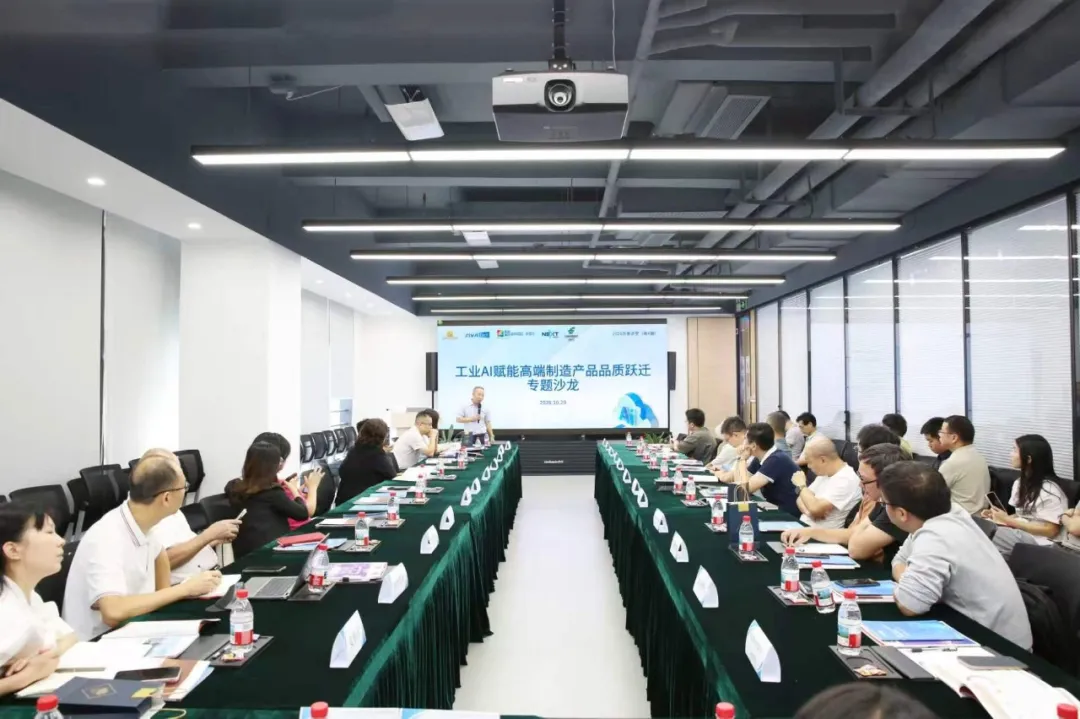
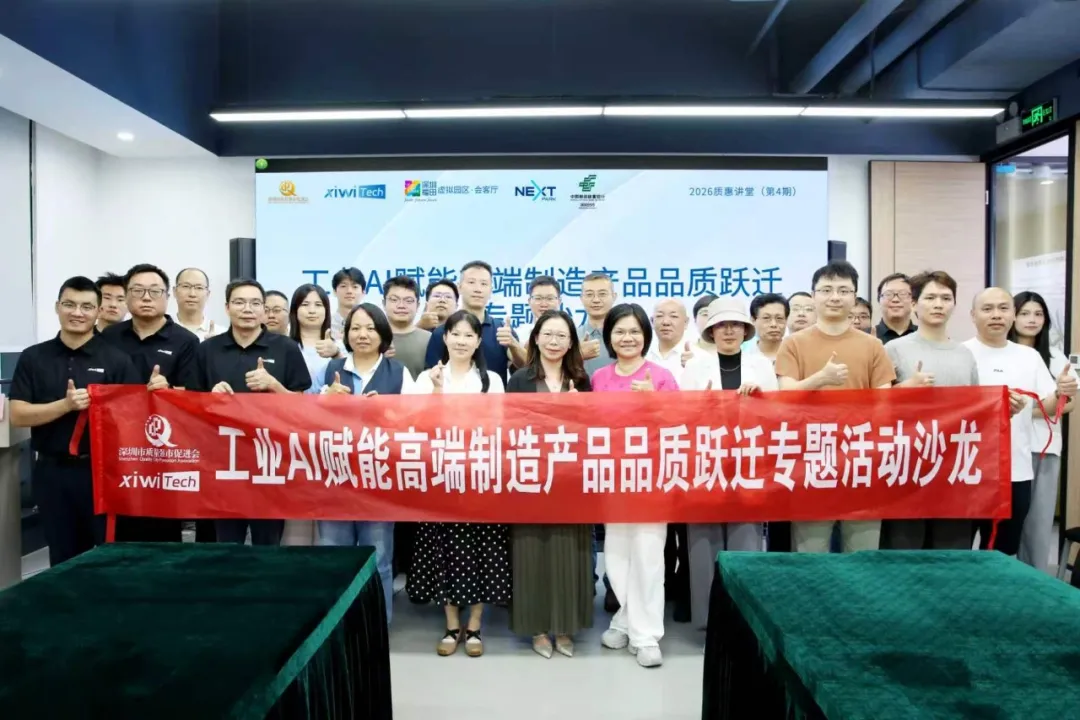
On October 29, the 2026 Quality & Benefit Lecture (4th session) — a special salon on 'Industrial AI Empowering High-End Manufacturing Product Quality Leap' — was successfully held. The event was guided by the Futian District Enterprise Service Center in Shenzhen and jointly organized by the Shenzhen Association for Promoting a Quality-Strong City, Xiwitech (Guangzhou) Co., Ltd., and Shenzhen Next Generation Industrial Park, with support from the Shenzhen branch of China Postal Savings Bank. Zhang Wen, Vice President and Secretary-General of the Shenzhen Association for Promoting a Quality-Strong City, attended the event. More than 30 managers and quality heads from companies like Vertiv Technology, Seg, Skyworth Digital, De Lan Ming Hai, and Ugreen Technology took part in the discussions.
This event invited Chinese experts from the China-Germany Digitalization Working Group, a senior digital transformation advisor from the US GLP, Huawei's senior digital transformation advisor Zhang Zhongxin, and Ping Shan, founder and CTO of Xiwitech, to give special talks. The focus is on the pain points of smart digital transformation in manufacturing quality management and exploring how AI can drive a quality revolution.
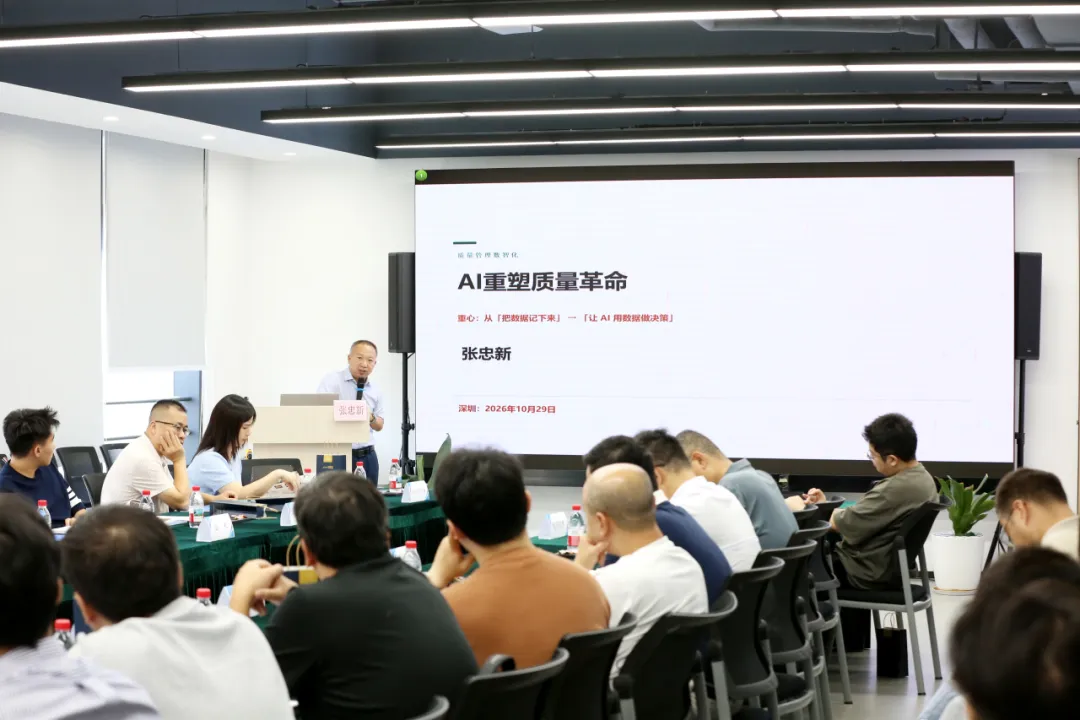
Zhang Zhongxin, in his talk titled 'AI Reshaping the Quality Revolution: Practical Implementation of Intelligent Single-Point Scenarios,' systematically explained the core idea that the focus of quality management is shifting from 'just recording data' to 'letting AI make decisions based on data.' He pointed out that implementing AI in quality has a clear order: first, build a computable data foundation, then refine usable algorithms, and finally achieve autonomous decision-making quality agents. Skipping data governance and directly buying models is a major reason projects fail. He gave a systematic explanation covering the evolution of quality management paradigms, six key trend directions, platform architecture, data foundation, management upgrades, and implementation rhythms. He also offered three action suggestions: 'focus on building the data foundation before talking about buying algorithms,' 'use measurable indicators to initiate projects,' and 'pick 1 to 2 high-value scenarios to get the flywheel running.'
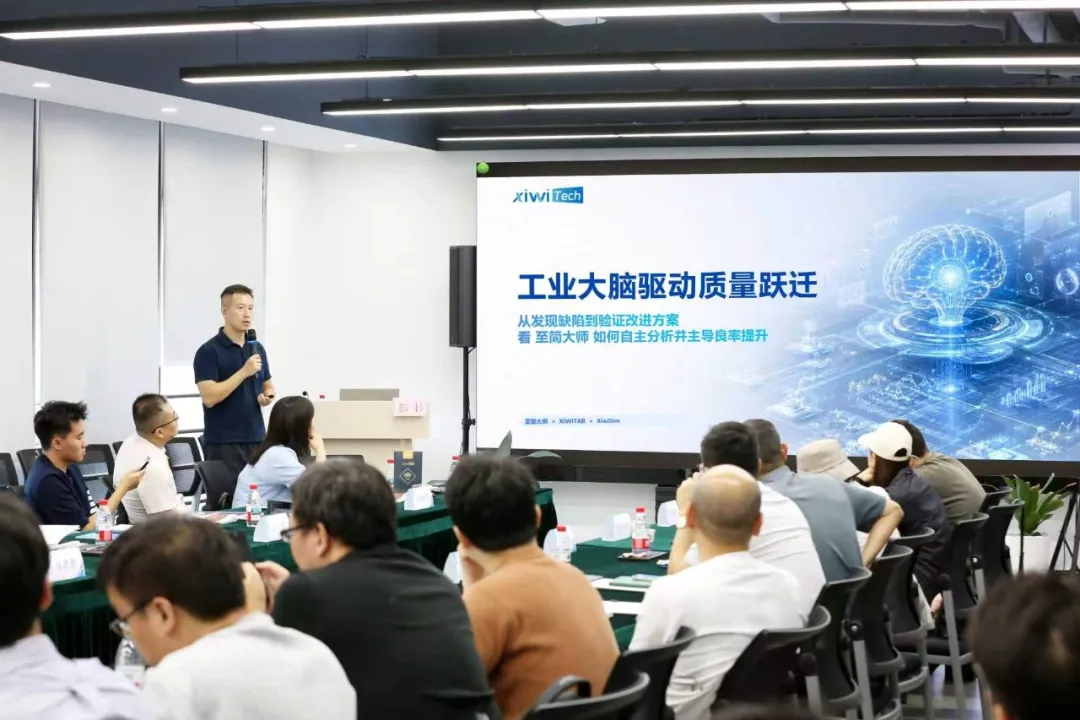
Peng Shan gave a talk titled 'Industrial Brain Driving Quality Leap,' breaking down the industry pain points of traditional yield analysis, like relying on engineers in relay, delayed defect detection, and large batch losses. He introduced XivTech’s core tech exploration in the industrial brain field, especially the production-grade industrial intelligence agent called 'Zhi Jian Master.' This agent is rooted in the Lean Six Sigma DMAIC methodology, combining rule engines with large model capabilities to achieve multimodal perception, autonomous decision-making on the production line, and instant response handling. It creates a new human-machine collaboration model: 'human sets the goal – agent autonomously analyzes and computes – engineer reviews and confirms.' Using the DMAIC-Bench industrial benchmark, he showcased the real-world performance of their self-developed multimodal large model and agent in lean quality improvement tasks. Through real industrial cases, he demonstrated the full closed-loop capability of industrial AI, from defect detection and root cause analysis to simulating and verifying improvement solutions, showing the huge potential of shifting industrial AI from 'experience-driven' to 'algorithm-driven.' It provides a tangible tech example for improving yield in precision manufacturing.
During the interactive session, the company representatives actively asked questions based on their own production experiences. They had in-depth discussions with the speakers on hot topics such as upgrading data collection on old equipment, data security issues in model training, cross-department collaboration in quality IT processes, and evaluating the effectiveness of smart quality projects. The company representatives said that this salon went beyond just talking about technical concepts, focusing instead on real factory pain points and practical industrial AI tools and application cases, providing practical references for companies to carry out digital and intelligent transformations in quality management and improve efficiency.