

Prologue: 120 billion Hong Kong dollars, three young women, and a battery no one can remember the name of
Fall 2026, Dashi Tower, Shenzhen. The pitch session for the AI Applications and Smart Hardware track of the CEIBS Alumni Startup Competition.
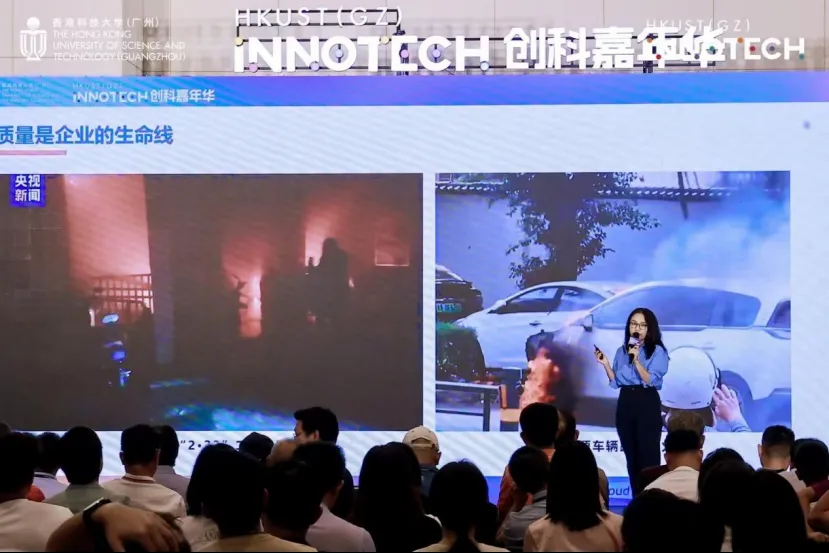
When it was Xiwitech's turn, Jian Jin didn't start by explaining the concept, showcasing the algorithm, or demonstrating a working prototype. Instead, she asked the entire audience to watch two videos first.
The first was footage of last year's highway spontaneous combustion incident that shook the nation—a new energy vehicle burst into flames instantly on the highway, reducing three young girls in the prime of their lives to charred remains. Within two days of the accident, the automaker's stock value plummeted by over 120 billion Hong Kong dollars.
The second clip showed a well-known power bank brand vanishing from the market overnight after a series of quality incidents.
She spoke just one sentence:
“Both of these incidents involved quality issues related to battery thermal runaway. But what consumers remember are the names of the automakers and power bank brands—no one remembers who manufactured the battery.”
The room fell silent. She continued, “And these are just the tip of the iceberg.”
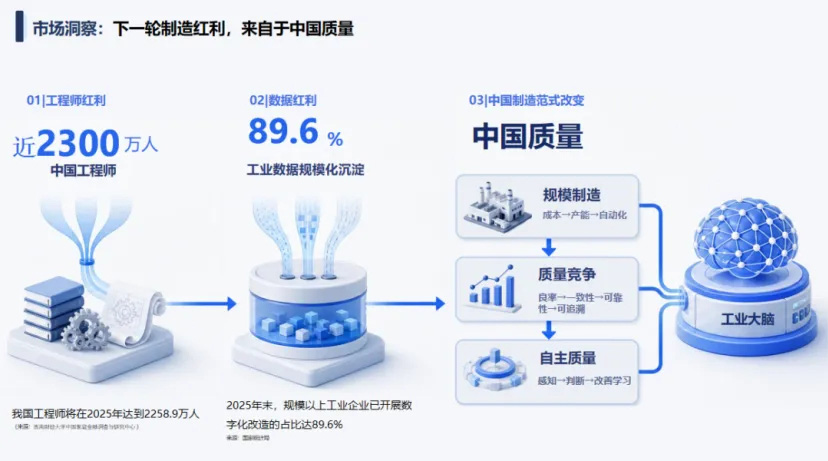
She didn't start by talking about technology or market trends; instead, she began with a truth that China's manufacturing sector is most reluctant to acknowledge—yet one that happens every single day: China produces more batteries, cars, and consumer electronics than any other country in the world, yet it cannot produce "quality brands" that consumers can name off the top of their heads. Behind this lies at least 800 billion in hidden quality-related losses each year, a shortage of 200,000 senior engineers, and muddled accounts that nearly every leading manufacturing company struggles to reconcile.
This is why Xiwitech exists. What Jian Jin aims to do is equip Chinese industry with a "brain" that can think and make decisions—to prevent the next accident from happening, to ensure the next brand doesn’t vanish, and to enable "Made in China" to stand tall among the world’s top-tier quality leaders.
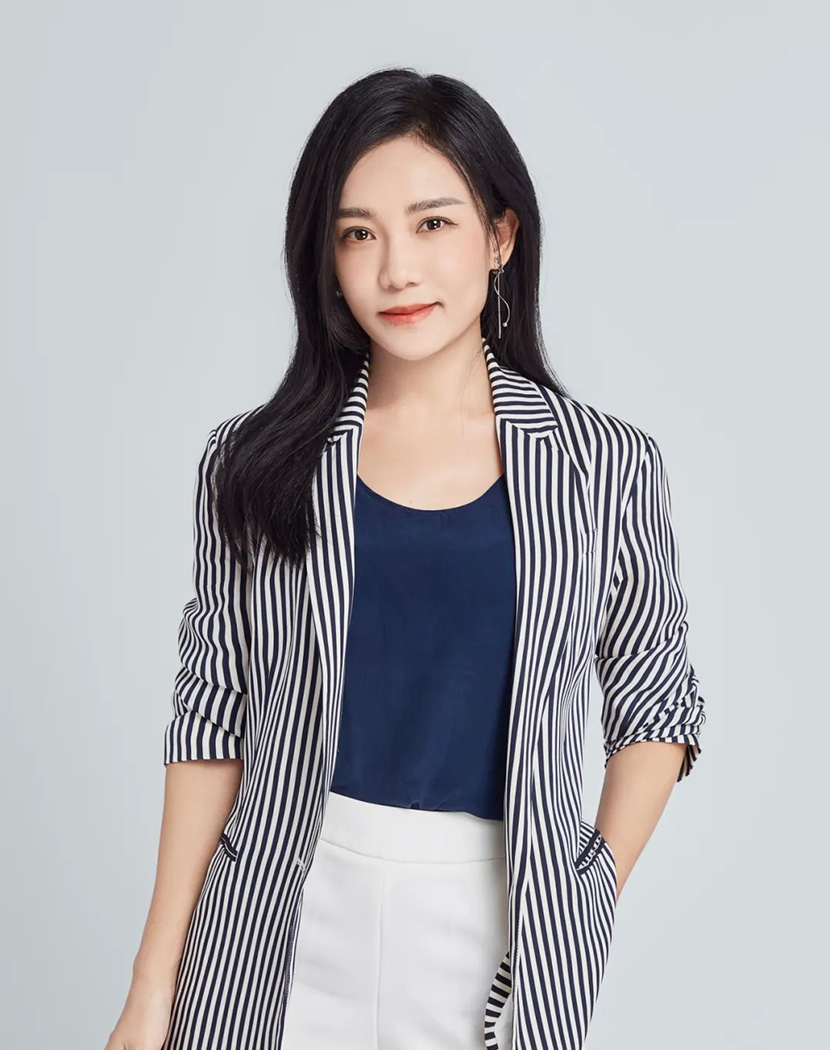
She is the protagonist of this story: a Tibetan girl who emerged from the high mountains of Shimao County, Sichuan; a "veteran saleswoman" who spent 15 years in sales at a multinational industrial software giant; and a female CEO who, without writing a single line of code, led an entire team—formerly from Siemens and the Hong Kong University of Science and Technology—into China's most cutthroat battleground.
NO. 1: From a remote village with no water or electricity, I stumbled my way all the way to Chengdu
Jian Jin's journey did not begin at Siemens.
She was born on a high mountain in Shimian County, Sichuan, to a Tibetan family. Her Tibetan name is Jian Demedo—"Medo" means "flower."
That place had no water or electricity, and she grew up eating potatoes. Her mother was illiterate, but she was firmly convinced of two things: education changes one's fate, and transportation changes one's fate. She led her entire family down the mountain time and time again. Eventually, the first thing Jian Jin would say after school was, "Where did we move to this time?"
Her family valued the extended family over the "nuclear family." As the eldest child, she was expected to set an example from a young age.
Her first job after graduation was as a telephone operator, but she quit before her probationary period was over.
Those days were tough, but she held onto a guiding principle. Back then, her neighbors and villagers had chipped in five or ten yuan to help pay her tuition, and that thread of gratitude had never been severed:
"Someone once held an umbrella over me, so I want to be able to hold one over others too."
This statement became the foundation of her entire being.
No. 2: That slap in Guangzhou brought her to her senses
After quitting her job as a switchboard operator, Jian Jin took a sales position at a Microsoft reseller. It didn’t take her long to realize that the reseller looked up to the manufacturer, and that the manufacturer was the one setting the rules.
In 2005, she joined Autodesk—the world’s leading industrial software company. When she started the job, she didn’t ask about her salary. When her manager asked who was willing to travel to Guangzhou for training, no one in the office spoke up—except her. That was her first time flying. A few months later, her manager assigned her to stay in Guangzhou, so she called a friend and had them cancel her lease in Chengdu. She hasn’t been back since—for 21 years.
What really brought her to her senses was a “criticism session” that took place less than a month after she started the job—right in the middle of the Christmas break and while her coworkers were rehearsing for the year-end party. Her coworkers labeled her as “lazy, a party animal, and unambitious.” She didn’t cry; she forced herself to hold back her tears.
My boss fired off two sentences:
“Others have worked hard all year—they’ve earned the right to have fun. You just got here—you don’t. If you’re here just to slack off, get out now.”
That Chinese New Year, her boss didn’t let her go home, but he took her out to dinner and gave her a red envelope. Years later, she said that was the most important push of her career. From then on, she embarked on a frantic journey of self-improvement.
Over the next 15 years, she made her mark at three global industrial software giants: she laid the groundwork at Autodesk (Chinese name: Oute Ke), served as the head of the South China division at PTC (Chinese name: Parametric Technology), where she tackled tough challenges, and gained a global perspective while working at Siemens. Her focus remained the same throughout—selling the best industrial software from Europe and the U.S. to China’s top factories.
But it was precisely during those 15 years that she found selling increasingly distasteful.
She has witnessed with her own eyes Chinese factories paying over 100 million in licensing fees to foreign companies each year, and she has also seen small factories caught off guard by lawsuits over pirated software. More commonly, however, yield rates remain low and manufacturing processes cannot be modified; engineers stay up all night poring over Excel spreadsheets, while the only machine capable of actually running the algorithms is the one equipped with U.S.-made software.
She began to doubt her own worth.
"Customers use pirated software just the same—so what's the value in selling them genuine software? For small and medium-sized enterprises, paying high prices for genuine software actually hinders their growth. What value am I really creating for society?"
She realized that the "customer value" she took such pride in might simply be a moat for foreign companies.
In 2020, she enrolled at CEIBS—not just to study business, but to break free from the confines of multinational corporations and take a fresh look at the industry.
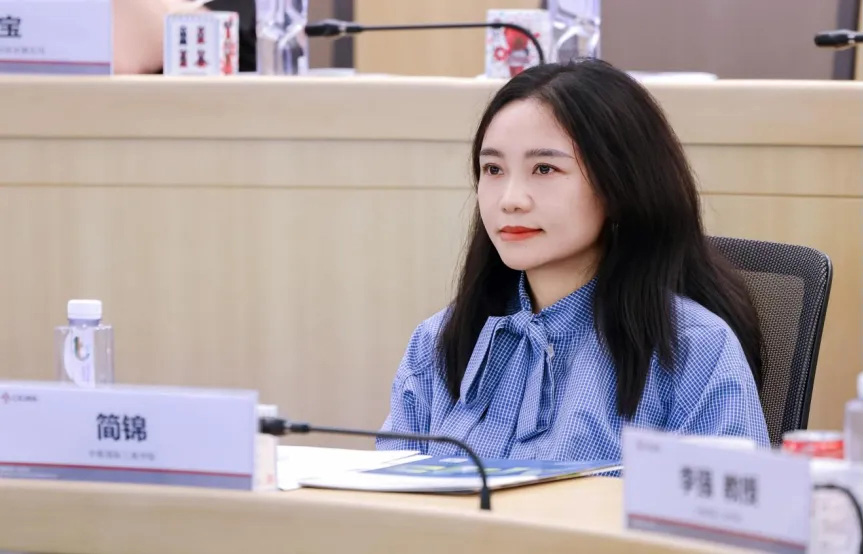
She's still waiting for a specific moment—when her child turns seven and starts elementary school.
"From ages 0 to 7, children need their mothers by their side. After age 7, what they need is a role model—not a 'nanny.'"
In 2021, her child started elementary school. She assembled a team and founded Xiwitech.
No. 3: A CEO Who Doesn't Write Code—What Qualifies Him to Lead a Hard Tech Company?
Xiwitech's public branding is very striking: "Agentic AI," "Siemens," and "an entire team from the Hong Kong University of Science and Technology." When these terms are listed together, it's easy to assume the founder is a certain scientist or tech enthusiast.
But Jian Jin is different. She has a purely business background.
This point came up repeatedly during the funding rounds. She didn't shy away from it either:
"Many organizations have previously invested in teams of scientists with impressive academic backgrounds, only to discover that commercialization posed challenges. Therefore, the founders of tech companies don't necessarily have to come from a technical background—after all, technology ultimately serves business."
She broke down the role of CEO very clearly: the core responsibility is goal management—defining the strategy, determining what is needed at each stage, and identifying the necessary resources. This approach is identical to how she ran her business in the past. She leaves the technical aspects to her partners and the team.
"It's basically impossible to find a founder who knows everything and excels at everything," she said. "I'm not afraid to hire people who are better than me. I want everyone I hire to be better than me."
She even incorporated this philosophy into the company's organizational structure. In the early days of the company, R&D spending exceeded 80 percent of revenue, and it remains above 60 percent today. She has never taken the "trading-oriented" shortcut—“Given my background, running a trading company would be the easiest path, but I've never even considered that route.”
She said something to management that was very "anti-founder":
"Don’t expect me to know everything. If I knew everything, what would I need you for?"
She requires the core management team to think like a CEO—she sets the direction and takes responsibility for any shortcomings, while they are responsible for carrying out and executing those plans. "What I'm aiming for is a situation where the company keeps running smoothly even when I'm not there."
This candor—acknowledging that they aren't a "jack-of-all-trades"—has actually allowed Xiwitech to navigate the funding market more smoothly than many tech-focused teams. By September 2026, the company had completed three rounds of funding and officially launched its Series A+ round, with a valuation of 1 billion yuan; the goal for this round is to raise 100 million yuan.
No. 4: Siemens' "Hands" × HKUST's "Brain"
If Jian Jin is the driving force behind Xiwitech's business, then the team behind her is the company's true technological moat.
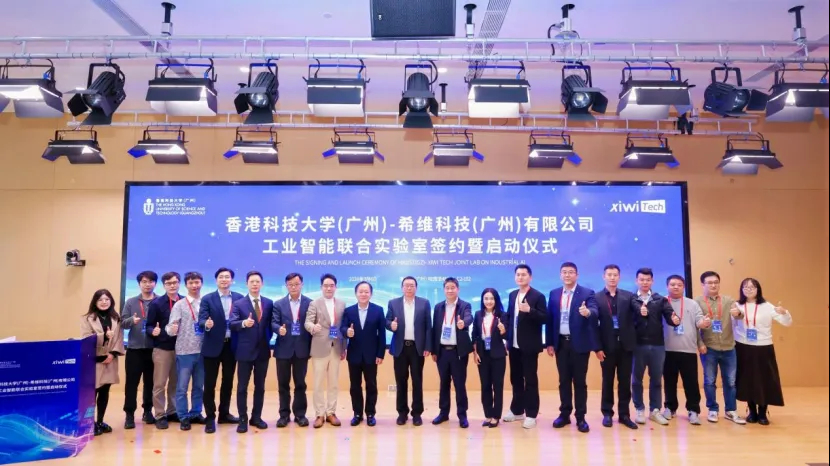
Xiwitech's team structure is somewhat unusual, as it incorporates two sets of rare genes:
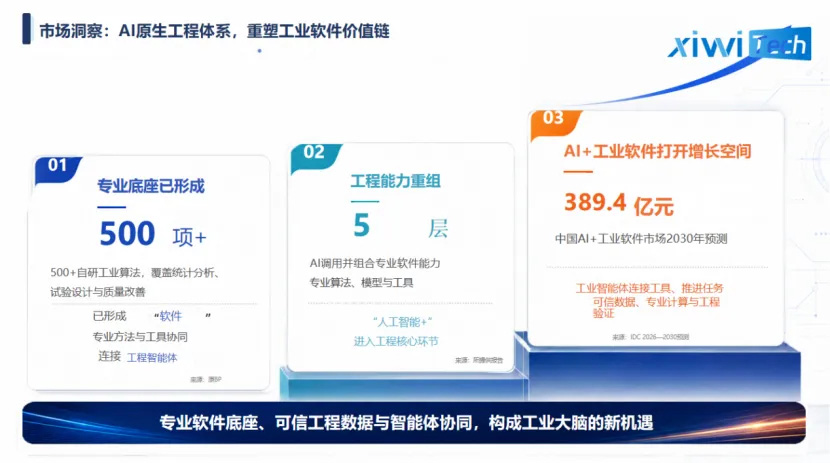
One team consists of the entire core team from Siemens Industrial Software. The core team members all come from Siemens Industrial Software and have an average of more than 15 years of hands-on experience in leading manufacturing companies. Led by CTO Peng Shan, the company has been granted 30 invention patents in areas such as industrial large-model training, high-dimensional data analysis, and automated quality control.
Another area of strength lies in HKUST's research capabilities in large-scale models. Xiwitech has established a joint laboratory with the Hong Kong University of Science and Technology (Guangzhou) focused on industrial intelligence; this initiative was selected as a flagship innovation and technology project at HKUST (Guangzhou) and featured at the 4th INNOTECH HKUST (Guangzhou) Innovation and Technology Carnival.
They understand both the "hands-on" and the "brain" aspects. The team at Siemens knows what the world's leading industrial software looks like and exactly where customers' pain points lie; the team at HKUST knows how to train cutting-edge agentic AI and deploy it in real-world industrial settings.
Jian Jin's own summary is: "We know where the gaps lie in global industry, what China is lacking, what the pain points are, which products can truly meet the needs of enterprises, and how to implement them—this is our most scarce asset."
No. 5 “We don't need more hands; we need smarter minds.”
What Xiwitech does, in a nutshell: It uses AI-native industrial software to help Chinese manufacturing companies effectively manage yield and manufacturing processes.

But what truly defines this company is Jian Jin's redefinition of the concept of "quality."
She observed that over the past few decades, China's manufacturing sector has had a major blind spot in its understanding of "quality"—it has been focused on "putting out fires": inspecting, testing, and identifying defects after products have already been manufactured. But by that point, the products are already out in the market, the damage has been done, and it's irreversible.
"This is putting the cart before the horse."
Her answer was "full life cycle + full industrial chain." There are two key points:
First, more than 70% of quality issues stem from design flaws, not from inspections. If problems arise during R&D and manufacturing, there's no way to fix them later on.
Second, discrete manufacturing has already evolved into a collaborative effort across the entire industrial chain. A significant portion of the components used by the lead manufacturer comes from suppliers; if a supplier encounters problems, no amount of effort at the final assembly plant will make a difference.
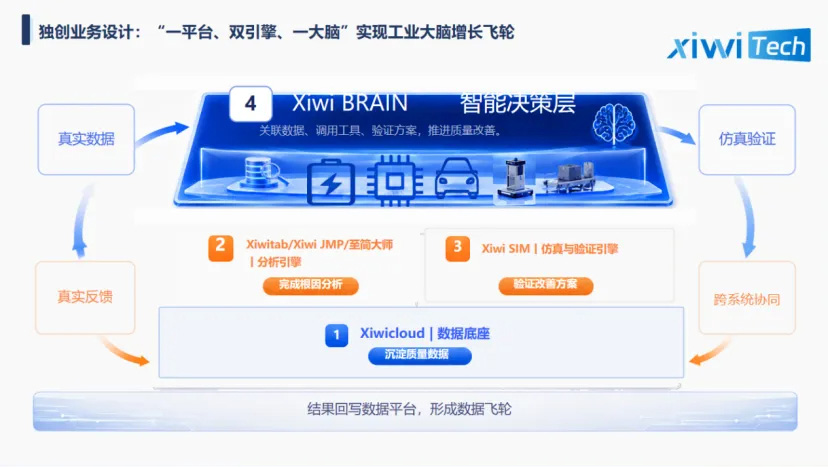
Xiwitech has established a closed-loop system—"Quality Perception + Causal Data + Simulation Training + Proactive Execution." In terms of the product, this is implemented across three layers:
· Base Layer: A full-chain, multimodal data platform. It not only resolves isolated issues but also feeds the AI with authentic, top-tier industrial data—the kind that simply cannot be obtained on the public internet.
· Middle layer: Analytical and simulation software designed to replace imported solutions. It first identifies root causes and then simulates scenarios in a virtual environment, eliminating the need to pay the price on actual production lines.
· Top layer: An industrial brain capable of thinking and making decisions. The closed-loop feeds back to the bottom layer, creating a virtuous cycle.
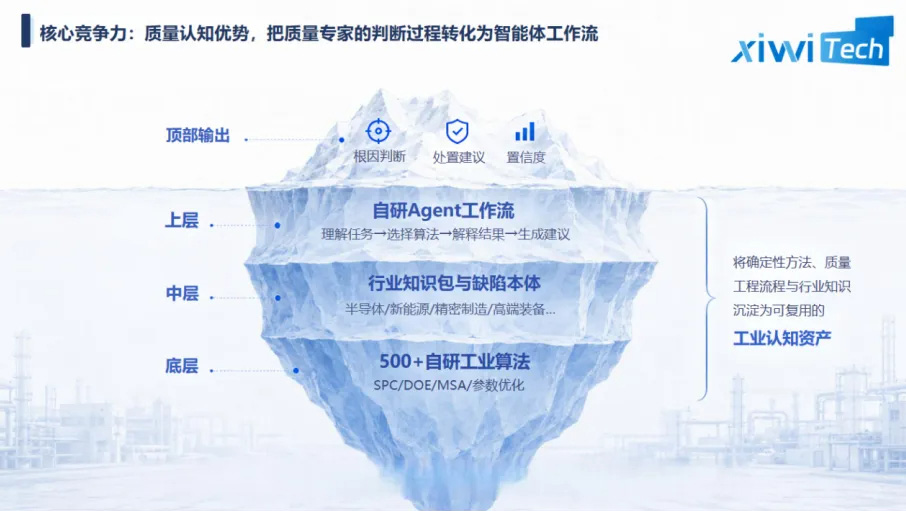
During the roadshow, she made a very candid remark: "Factories don't need more bodies and hands; they need smarter minds—people who can effectively solve pain points in real-world business scenarios and deliver a positive ROI."
This statement virtually defines Xiwitech's technical approach and sets it apart from most embodied intelligence companies on the market.
No. 6: A 9-point yield rate and the "Impossible Triangle"
Industrial AI is the easiest to talk about in terms of stories, but the hardest when it comes to data. Jian Jin's approach is simple: just present the numbers.
After a listed company client adopted Xiwitech, its product yield rate increased by 9 percentage points, its workforce was reduced by half, and it achieved faster delivery times.
In manufacturing, there's a concept known as the "impossible triangle": cost, quality, and delivery time. A 9-point increase in yield rate, a 50% reduction in workforce, and faster delivery times mean that this triangle has been broken for this client.
She categorized Xiwitech's market entry scenarios into three types:
First, yield and profit. Yield directly determines profit margins and customer satisfaction; if quality issues keep recurring, orders will dry up, and the company won’t even get a foot in the door.
Second is domestic substitution. Many clients use American industrial software, but licensed versions are exorbitantly expensive, and pirated versions carry the risk of litigation. Xiwitech has already successfully developed alternatives to several American industrial software programs (Xiwitab, which rivals Minitab, is one example), directly helping clients reduce costs.
Third is robotic transformation. Chinese manufacturing excels in hardware but lags in "brains"; the bottleneck in embodied intelligence lies precisely in the "brain." Xiwei's mission is to train the advanced problem-solving capabilities of human engineers into a "brain" and integrate it into embodied robots.
Xiwitech's client roster includes industry leaders in China's high-end manufacturing sector, such as Luxshare and Lingyi.
She doesn't want to be a "general practitioner": "If I were a doctor, I definitely wouldn't be a general practitioner. I'd want to be a leading expert in neurosurgery or cardiac surgery—I'd be tackling the toughest challenges, providing help when it's needed most, not just adding icing on the cake."
No. 7 Conclusion: The Tibetan Girl Who Came Down from the Mountains
Looking back on Jian Jin's past twenty years, she has actually been doing the same thing all along: bringing more advanced capabilities to places where they are most needed.
From the high-mountain villages of Shimao County to Chengdu—that was her; from a telephone operator in Chengdu to a Fortune 500 company in Guangzhou—that was her; from the global stage at Siemens to the classrooms at CEIBS, and then to her own company—that was still her.
The only difference is this: for the first fifteen years, she sold other people's products; for the past five years, she has been creating her own.
She possesses a rather rare "multifaceted makeup": a reverence for responsibility rooted in her Tibetan family culture; her mother's primal belief that "education and transportation can change one's destiny"; her father's innate, tenacious business acumen; a global perspective honed over fifteen years in multinational corporations; and the business mindset instilled in her by CEIBS.
Put together, these elements form the Jian Jin of today—a female CEO whose Tibetan name is "Jian Demeduo," meaning "flower."
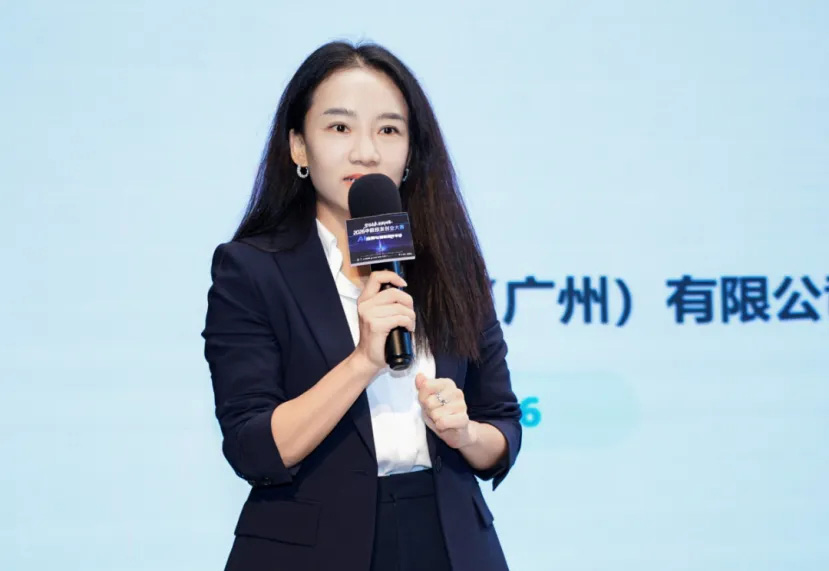
Every day, she reflects on this:
"If you start at 1 and improve by 0.01 every day, what number will you have after a year? If you lose 0.01 every day, what number will you have after a year? If you don't move, you're not just standing still—you're losing value."
In an era where everyone is chasing large models and general-purpose embodied AI, Xiwei has chosen a slower, more labor-intensive, and even "dirtier" path: diving deep into the production lines of batteries, automobiles, semiconductors, and 3C products—scrutinizing every yield point, fine-tuning every process parameter, and replacing one set of American software after another.
It's hard for a company like this to become a media darling in the short term. But if "Made in China" is truly to make the leap from "big" to "strong," such a "brain" will certainly be recognized by history.
She knows where her customers' pain points lie, where the strengths of Europe and the U.S. lie, and where China's weaknesses lie—and she also knows that commercialization ultimately determines everything.
But she knows even more clearly why she set out on this journey:
"Someone once held an umbrella over me, so I want to be capable of holding one over others."
From that high mountain in Shimian County to today's Xiwitech, she has held that umbrella for twenty years. Now, she wants to hold an even bigger one over "Made in China."